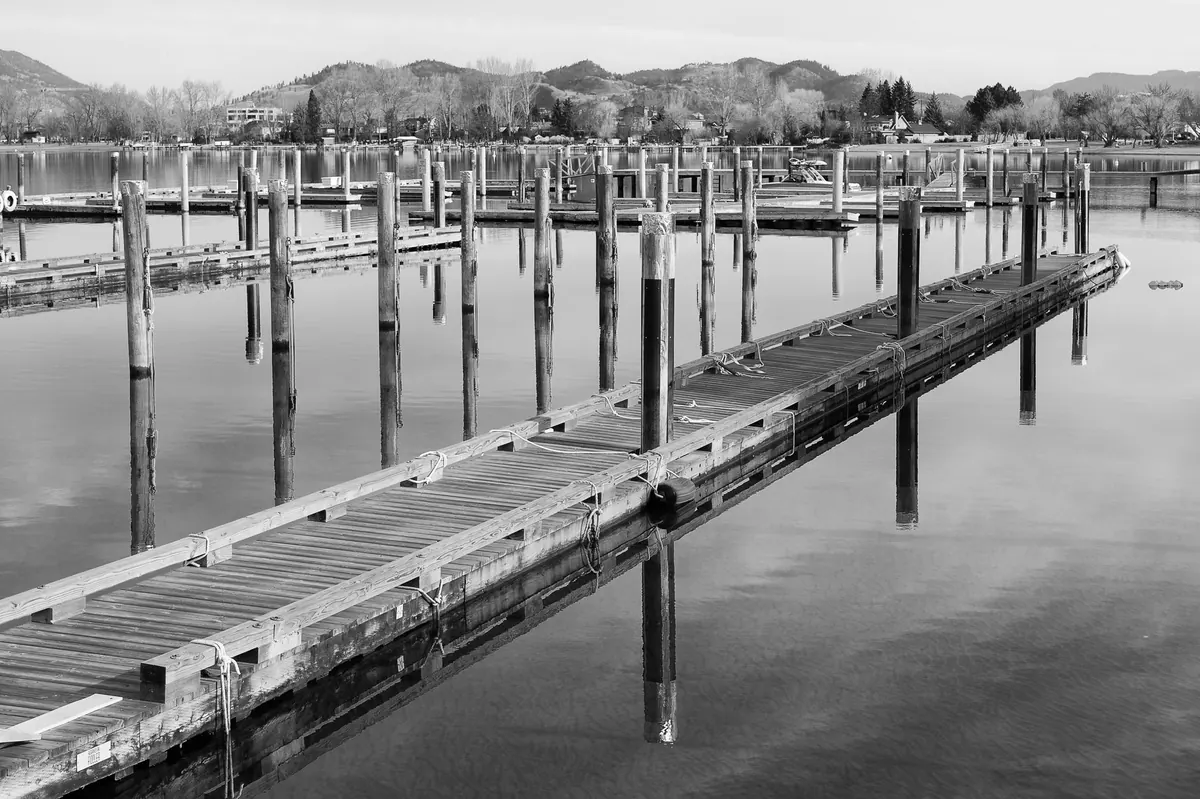
Walk to the end of any neighborhood dock and you can usually tell what kind it is before you step aboard. A fixed dock meets your foot like a sidewalk. A floating dock gives a little, rising and falling with the water and your weight. Both can be excellent. Both can be a mistake. The right choice depends less on fashion than on your shoreline, your water levels, your winter weather, and how you actually use the dock.
The basic difference, in plain terms
A fixed dock sits on posts, pilings, cribs, or legs that reach the bottom. Its deck height stays put. A floating dock rests on encapsulated foam, air chambers, or pontoon-like floats, and it is held in place by pilings, chains, cables, or shore anchors. The deck moves up and down with the water.
That single mechanical difference drives almost every trade-off that follows. Fixed docks feel rock solid but struggle when water levels swing. Floating docks adapt to changing water but can feel tender underfoot and require careful anchoring.
Stability and comfort underfoot
If you want to set a heavy bench, a fish cleaning table, or a boat lift on the dock, a fixed structure usually wins. It does not roll when someone walks past, and it handles concentrated weight without flexing. Floating docks can be stable too, especially wide models with generous flotation and rigid connections, but a narrow floating dock with light foam will feel every step.
Think about who uses the dock. Grandparents, small children, and guests who are unsure on their feet often prefer the predictable surface of a fixed dock. Swimmers, kayakers, and owners of small boats may barely notice a gentle float. If you plan to moor a heavy boat or install a lift, ask the dock builder to size the flotation and framing for that load, not just for foot traffic.
What you feel on a windy day
On a fixed dock, waves slap the side and spray may come over the deck, but the structure stays still. In a storm surge or flood, water can cover the deck entirely. On a floating dock, boat wakes and waves make the whole platform move. A well-designed gangway or ramp absorbs that motion. A poorly designed one becomes a trip hazard.
Water depth and shoreline conditions
Fixed docks need a bottom that accepts pilings or cribs and enough water at the lowest expected level to keep the structure usable. Rocky or hard bottoms can make pile driving difficult. Soft muck may not hold a piling without extra work. Floating docks shine where the bottom is uneven, deep, rocky, or sensitive, and where water levels change a lot.
Tidal rivers, large reservoirs, and lakes with seasonal drawdown are natural fits for floating docks. The dock rises in spring and settles in late summer without a redesign. But floating docks still need enough water to float. In a shallow cove, a floating dock may rest on the bottom at low water, which can damage the floats and trap debris.
Measure the water depth at the outer end of the dock at the lowest level you expect, not at the prettiest weekend of the year. That number prevents more dock mistakes than any brochure.
Maintenance, lifespan, and seasonal work
Both types need inspection, but they age differently. Fixed docks depend on pilings, braces, and hardware that live in or near the water. Wood rots. Steel corrodes. Ice can heave a piling upward. Floating docks depend on flotation, welds, chains, and anchors. Foam can become waterlogged. Cables can chafe. Decking, rails, and fasteners need attention on either type.
A simple annual routine goes a long way:
- Check bolts, brackets, and rail connections for looseness or rust.
- Inspect floats for cracks, punctures, or signs of water inside.
- Test chains, cables, and anchor points for wear and corrosion.
- Clear debris from the deck, under the dock, and around anchors.
- Look at the electrical connection and any lighting, and repair damaged cords or fixtures.
- Note any new scrape marks on the bottom or shoreline, which can signal shifting.
Seasonal removal is often easier with a floating dock. Many can be towed, winched, or rolled to shore. Fixed docks may stay in place year-round, or the deck may be removed while pilings remain. That difference matters if you prefer a short spring opening and a quick fall closing.
Ice, storms, and changing water levels
Ice is the decision-maker in cold climates. A fixed dock’s pilings can be gripped and lifted by expanding ice, pulling them out of alignment. A floating dock can be pushed, twisted, or pinned against the shore. No dock is ice-proof. In areas with hard freezes, many owners remove floating docks and inspect fixed docks carefully after thaw.
Storms bring different risks. Floating docks can ride a surge, but they may chafe against pilings or drag anchors. Fixed docks can be submerged, struck by debris, or undermined at the shoreline. If your water level changes by several feet through the year, floating usually requires less adjustment. If it changes very little and your bottom is good, fixed is simpler.
Cost and installation
Cost depends on length, width, materials, bottom conditions, anchoring method, site access, permits, and local labor. Floating docks often cost more upfront because of the flotation and anchoring system. Fixed docks can be less expensive in shallow, protected water with an easy bottom, but pile driving or crib construction can raise the price quickly.
Compare installed prices, not kit prices. Ask what is included for delivery, assembly, anchoring, electrical work, and removal. A cheap dock that is hard to install or repair is not cheap for long. For money, permit, and safety decisions, check with local authorities and a qualified marine contractor who knows your waterway.
Shoreline impact and permits
Fixed pilings disturb the lakebed or riverbed where they are driven or set. Floating docks may reduce that disturbance, but anchors, chains, and cables can still scour the bottom and affect submerged vegetation. Shading and boat traffic also matter. Many waterways regulate dock size, location, materials, and seasonal placement.
Before you order anything, check the rules for your lake, river, or bay. Rules vary by state, province, county, lake association, and even by cove. Ask about setback from property lines, maximum square footage, gangway requirements, and whether floating docks must be removed in winter. Get written approval first. A dock that cannot be permitted is an expensive pile of decking.
A simple way to decide
- Measure water depth at the lowest expected level and at the dock’s outer end.
- Identify the bottom: sand, mud, rock, or something a piling cannot grip.
- Note ice, wave action, current, and how much the water level changes.
- List how you will use the dock: swimming, fishing, small boats, a lift, or heavy gatherings.
- Get two or three installed quotes and ask each builder what they would choose for your shoreline and why.
If the water rises and falls, the bottom is difficult, or you want easy seasonal removal, a floating dock is often the practical answer. If the water is stable, the bottom is friendly, and you want a solid platform for heavy use, a fixed dock may serve you better. A hybrid design, such as a floating dock held by pilings, can split the difference. Choose the dock that handles your worst week, not your best weekend.
Photo: Allan Van Gasbeck / Pexels